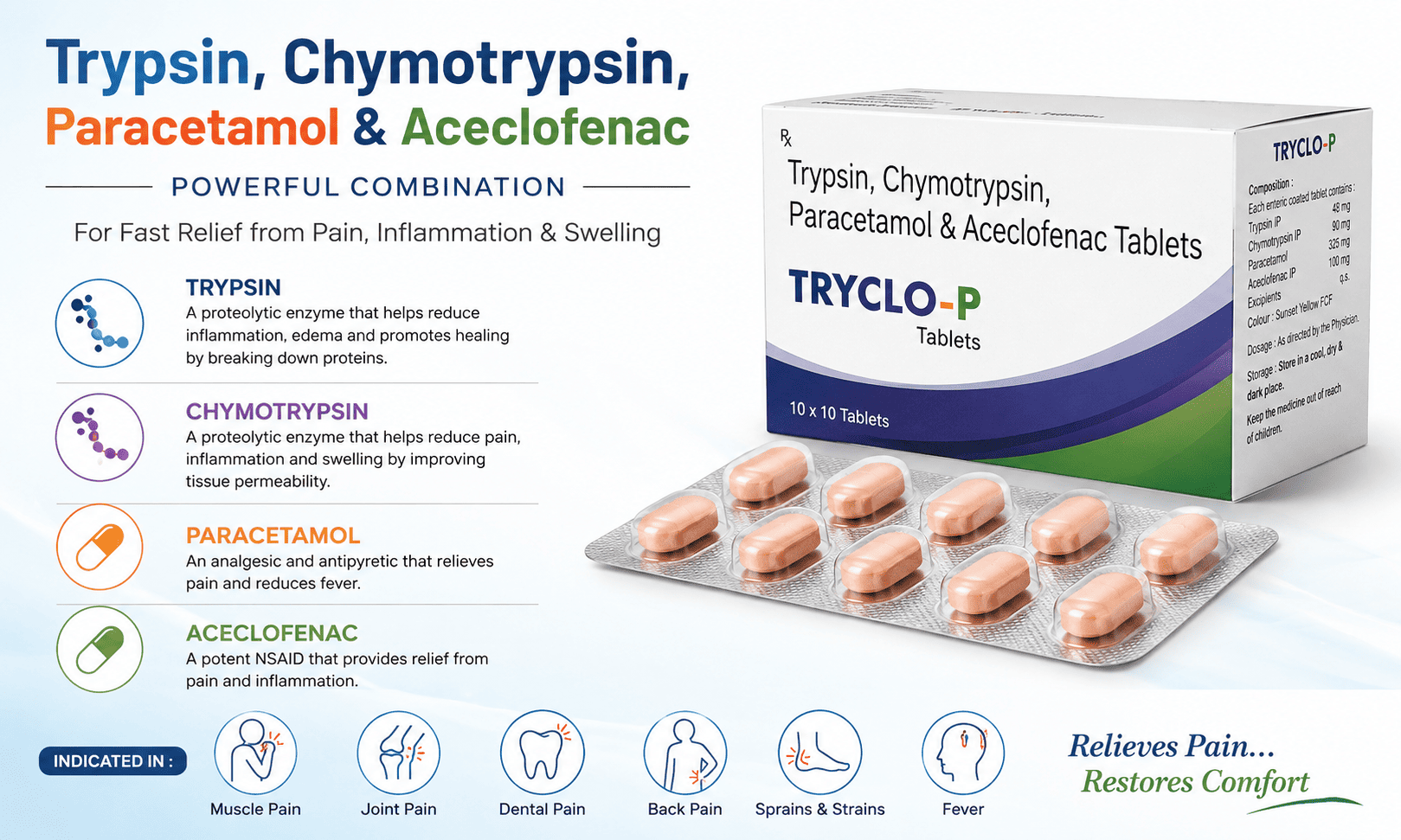
Trypsin + Chymotrypsin + Paracetamol + Aceclofenac is a combination medicine commonly prescribed to relieve pain, inflammation, swelling, and fever associated with various musculoskeletal and post-operative conditions. This combination offers both anti-inflammatory and pain-relieving effects while also helping reduce tissue swelling and promoting faster recovery. Pharma Lead is a leading online B2B pharma portal connecting pharma entrepreneurs with ISO, WHO-GMP & GMP-certified Trypsin Chymotrypsin with Paracetamol and Aceclofenac Drops for PCD franchise and third-party manufacturing opportunities.
Trypsin, Chymotrypsin with Paracetamol and Aceclofenac: Uses, Benefits, Dosage & Side Effects
Composition
1. Trypsin
Trypsin is a proteolytic enzyme that helps break down proteins and damaged tissues. It assists in reducing inflammation and swelling at the affected site.
2. Chymotrypsin
Chymotrypsin is another enzyme that works alongside trypsin to reduce edema (swelling) and promote tissue healing.
3. Aceclofenac
Aceclofenac is a Non-Steroidal Anti-Inflammatory Drug (NSAID) that reduces pain, inflammation, and stiffness by blocking the production of prostaglandins.
4. Paracetamol
Paracetamol (Acetaminophen) acts as an analgesic and antipyretic, helping relieve pain and fever.
Uses of Trypsin Chymotrypsin with Paracetamol and Aceclofenac
1. Osteoarthritis
The combination helps relieve:
- Joint pain
- Joint stiffness
- Swelling
- Reduced mobility
It improves daily movement and quality of life in osteoarthritis patients.
2. Rheumatoid Arthritis
Doctors prescribe this medicine to reduce:
- Joint inflammation
- Pain
- Morning stiffness
- Swelling around joints
The anti-inflammatory action helps patients perform routine activities more comfortably.
3. Sports Injuries
Effective in treating:
- Ligament injuries
- Tendon injuries
- Muscle sprains
- Muscle strains
The enzyme combination helps reduce swelling and accelerates recovery.
4. Post-Surgical Swelling and Pain
After surgeries, patients often experience:
- Tissue inflammation
- Swelling
- Pain
Trypsin and Chymotrypsin assist in reducing edema while Aceclofenac and Paracetamol provide pain relief.
5. Dental Pain and Dental Procedures
Commonly prescribed after:
- Tooth extraction
- Dental implants
- Root canal treatment
- Gum surgeries
It helps reduce post-procedure pain and facial swelling.
6. Back Pain
Useful for:
- Lower back pain
- Lumbar spondylosis
- Muscle spasms
- Disc-related discomfort
The medicine reduces inflammation and improves mobility.
7. Cervical Spondylosis
Patients suffering from neck pain and stiffness may benefit from this combination due to its anti-inflammatory and analgesic effects.
8. Frozen Shoulder
The medicine helps manage:
- Shoulder pain
- Restricted movement
- Inflammation
Regular treatment can improve shoulder function.
9. Fractures and Orthopedic Conditions
Doctors often prescribe it during recovery from:
- Bone fractures
- Joint injuries
- Orthopedic surgeries
The enzymes help reduce swelling and support healing.
How Does It Work?
Aceclofenac
Blocks cyclooxygenase (COX) enzymes, reducing prostaglandin production responsible for pain and inflammation.
Paracetamol
Acts on the central nervous system to reduce pain and fever.
Trypsin and Chymotrypsin
Break down inflammatory proteins and dead tissue, helping reduce swelling and promote faster healing.
Together, these ingredients provide comprehensive pain management and recovery support.
Benefits
Effective Pain Relief
Provides quick relief from moderate to severe pain.
Reduces Swelling
Enzymes help decrease tissue edema and inflammation.
Faster Recovery
Supports healing after injuries and surgeries.
Improves Mobility
Reduces stiffness and improves joint movement.
Controls Fever
Paracetamol helps lower fever when present.
Dosage
- Usually taken as prescribed by a doctor.
- Commonly administered after meals to reduce stomach irritation.
- Swallow the tablet whole with water.
- Do not exceed the recommended dosage.
Always follow your healthcare provider’s instructions.
Side Effects
Some patients may experience:
Common Side Effects
- Nausea
- Vomiting
- Indigestion
- Stomach pain
- Heartburn
- Dizziness
- Headache
Less Common Side Effects
- Skin rash
- Allergic reactions
- Diarrhea
- Loss of appetite
Serious Side Effects
Seek medical attention if you notice:
- Severe stomach bleeding
- Black stools
- Difficulty breathing
- Swelling of face or throat
- Severe allergic reactions
Precautions
Avoid If You Have
- Severe liver disease
- Severe kidney disease
- Active stomach ulcers
- NSAID allergy
Use With Caution
- Elderly patients
- Heart disease patients
- High blood pressure patients
- Asthma patients
Pregnancy and Breastfeeding
Consult a doctor before using this medicine during pregnancy or breastfeeding.
Drug Interactions
This medicine may interact with:
- Blood thinners (Warfarin)
- Aspirin
- Other NSAIDs
- Steroids
- Certain blood pressure medicines
- Diabetic medications
Inform your doctor about all medicines you are taking.
Storage Instructions
- Store below 25°C.
- Keep away from moisture and direct sunlight.
- Keep out of reach of children.