
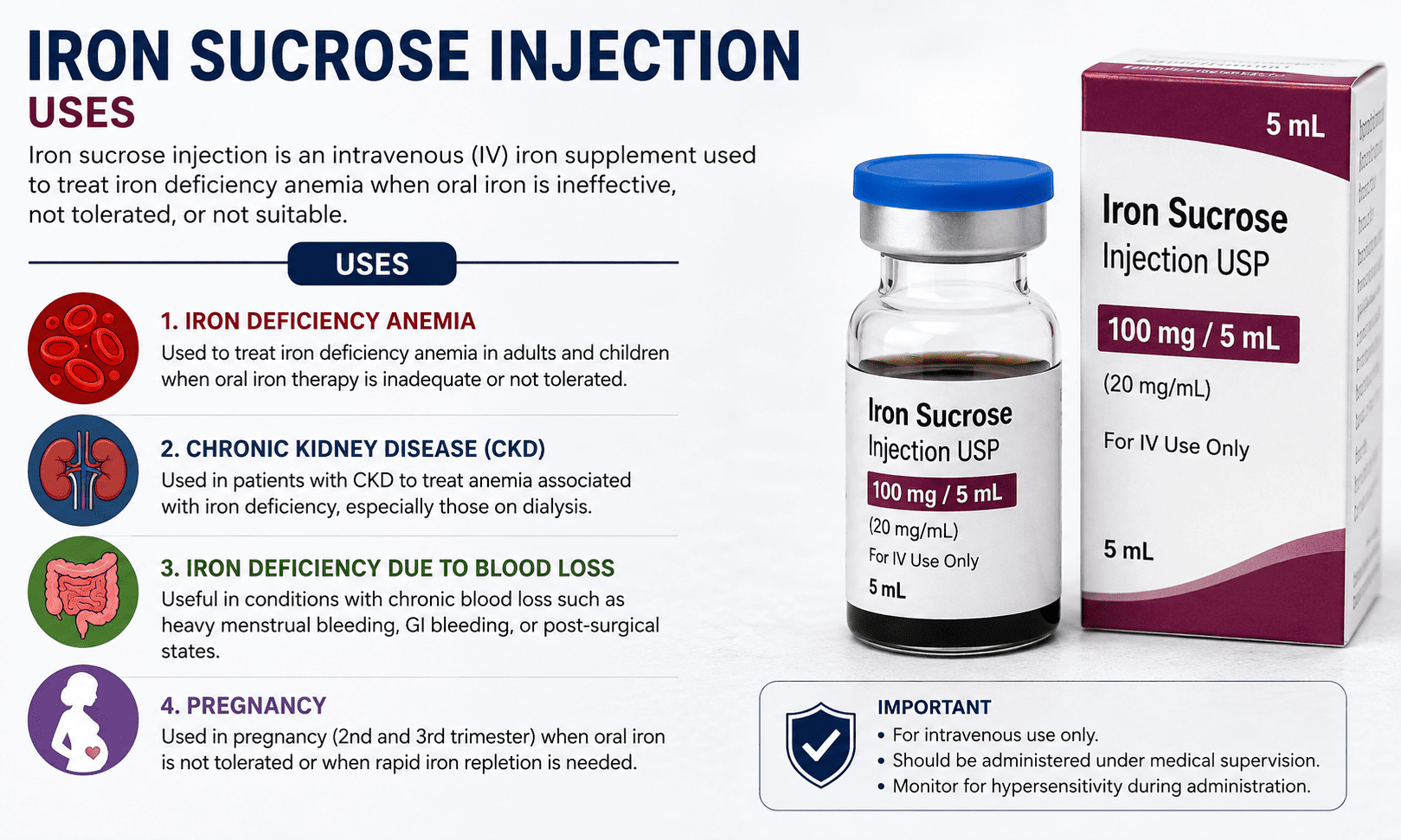
Iron Sucrose Injection is an intravenous (IV) iron preparation used to treat iron deficiency anemia, especially in patients who cannot take oral iron supplements or when oral iron therapy is ineffective. It helps replenish iron stores in the body and supports the production of healthy red blood cells. Pharma Lead is a leading online B2B Pharma Portal dedicated to connecting aspiring Pharma entrepreneurs, distributors, and investors with Trusted Pharma Franchise companies across India.
Iron Sucrose Injection Uses: Benefits, Dosage, Side Effects, and Precautions
Iron Sucrose Injection is a sterile iron replacement product administered directly into the bloodstream through a vein. It contains iron in the form of iron sucrose complex, which is utilized by the body for hemoglobin production.
Hemoglobin is a protein found in red blood cells that carries oxygen throughout the body. When iron levels become low, the body cannot produce sufficient hemoglobin, resulting in iron deficiency anemia.
Composition
- Active Ingredient: Iron Sucrose
- Available Strengths:
- 20 mg/ml
- 100 mg/5 ml
- 200 mg/10 ml
1. Treatment of Iron Deficiency Anemia
The primary use of Iron Sucrose Injection is to treat iron deficiency anemia caused by:
- Chronic blood loss
- Poor dietary iron intake
- Malabsorption disorders
- Increased iron requirements during pregnancy
It rapidly restores iron levels and improves hemoglobin production.
2. Chronic Kidney Disease (CKD)
Patients with chronic kidney disease often develop anemia due to reduced erythropoietin production and iron deficiency.
Iron Sucrose Injection is commonly prescribed for:
- Hemodialysis patients
- Peritoneal dialysis patients
- Non-dialysis CKD patients
It helps improve hemoglobin levels and reduces the need for blood transfusions.
3. Anemia During Pregnancy
Pregnant women frequently experience iron deficiency due to increased nutritional demands.
Iron Sucrose Injection may be recommended when:
- Oral iron supplements are not tolerated
- Severe anemia is present
- Rapid correction of iron deficiency is required
4. Postpartum Anemia
After childbirth, women may suffer from significant blood loss leading to anemia.
Iron Sucrose Injection helps:
- Restore iron reserves
- Improve energy levels
- Support faster recovery after delivery
5. Gastrointestinal Disorders
Patients suffering from gastrointestinal diseases may not absorb oral iron effectively.
Conditions include:
- Inflammatory bowel disease (IBD)
- Crohn’s disease
- Ulcerative colitis
- Celiac disease
Iron Sucrose Injection bypasses the digestive system and delivers iron directly into circulation.
6. Cancer-Related Anemia
Cancer patients receiving chemotherapy often develop anemia.
Iron Sucrose Injection may be used alongside erythropoiesis-stimulating agents (ESAs) to improve hemoglobin levels.
7. Preoperative and Postoperative Iron Deficiency
Before or after surgery, doctors may prescribe Iron Sucrose Injection to:
- Correct anemia
- Reduce blood transfusion requirements
- Improve surgical recovery
How Does Iron Sucrose Injection Work?
After intravenous administration:
- Iron sucrose enters the bloodstream.
- Iron is released from the complex.
- The iron binds to transferrin.
- Transferrin transports iron to the bone marrow.
- The bone marrow uses iron to produce hemoglobin and red blood cells.
This process improves oxygen delivery throughout the body and alleviates anemia symptoms.
Benefits of Iron Sucrose Injection
Rapid Iron Replenishment
Provides faster correction of iron deficiency compared to oral supplements.
Better Tolerability
Causes fewer gastrointestinal side effects than oral iron preparations.
Improved Hemoglobin Levels
Supports healthy red blood cell production.
Reduced Need for Blood Transfusions
Helps manage moderate to severe anemia effectively.
Suitable for Poor Absorption Cases
Useful in patients who cannot absorb iron from the digestive tract.
Dosage and Administration
Iron Sucrose Injection should only be administered under medical supervision.
The dosage depends on:
- Body weight
- Hemoglobin levels
- Iron deficiency severity
- Underlying medical condition
Typical dosing may range from:
- 100 mg to 200 mg per session
- Multiple sessions may be required to replenish total iron stores
Administration methods:
- Intravenous injection
- Intravenous infusion
Symptoms of Iron Deficiency Anemia
Patients receiving Iron Sucrose Injection often experience:
- Fatigue
- Weakness
- Pale skin
- Dizziness
- Shortness of breath
- Headache
- Rapid heartbeat
- Reduced exercise tolerance
Improvement is generally observed within a few weeks of treatment.
Side Effects of Iron Sucrose Injection
Common Side Effects
- Nausea
- Vomiting
- Headache
- Muscle cramps
- Injection site pain
- Dizziness
- Low blood pressure
- Metallic taste
Less Common Side Effects
- Fever
- Chills
- Back pain
- Joint pain
- Skin rash
Serious Side Effects
Seek immediate medical attention if symptoms occur:
- Severe allergic reaction
- Difficulty breathing
- Chest pain
- Swelling of face or throat
- Severe hypotension
- Anaphylactic reaction
Precautions and Warnings
Use with Caution in:
- Patients with liver disease
- Individuals with iron overload disorders
- History of allergic reactions to IV iron products
Monitoring Required
Doctors may monitor:
- Hemoglobin levels
- Ferritin levels
- Transferrin saturation (TSAT)
- Serum iron levels
Regular monitoring helps avoid excessive iron accumulation.
Drug Interactions
Iron Sucrose Injection may interact with:
- Oral iron supplements
- Certain antibiotics
- Erythropoiesis-stimulating agents
Always inform the healthcare provider about all medications being used.
Use During Pregnancy and Breastfeeding
Pregnancy
Iron Sucrose Injection is often considered when oral iron therapy fails or severe iron deficiency anemia exists. It should be used only under medical supervision.
Breastfeeding
Small amounts of iron may pass into breast milk, but it is generally considered compatible with breastfeeding when prescribed by a physician.
Storage Instructions
- Store below 25°C.
- Protect from direct sunlight.
- Do not freeze.
- Keep out of reach of children.
- Use only if the solution is clear and free from particles.
Frequently Asked Questions (FAQs)
How quickly does Iron Sucrose Injection work?
Hemoglobin improvement is often seen within 2–4 weeks, although complete replenishment of iron stores may take longer.
Can Iron Sucrose Injection replace blood transfusion?
In many cases of iron deficiency anemia, it can reduce or eliminate the need for blood transfusions, depending on the severity of anemia.
Is Iron Sucrose Injection painful?
Patients may experience mild discomfort at the injection site, but the procedure is generally well tolerated.
Who should not take Iron Sucrose Injection?
Individuals with iron overload disorders, severe allergies to iron preparations, or certain liver conditions should use it only after medical evaluation.