
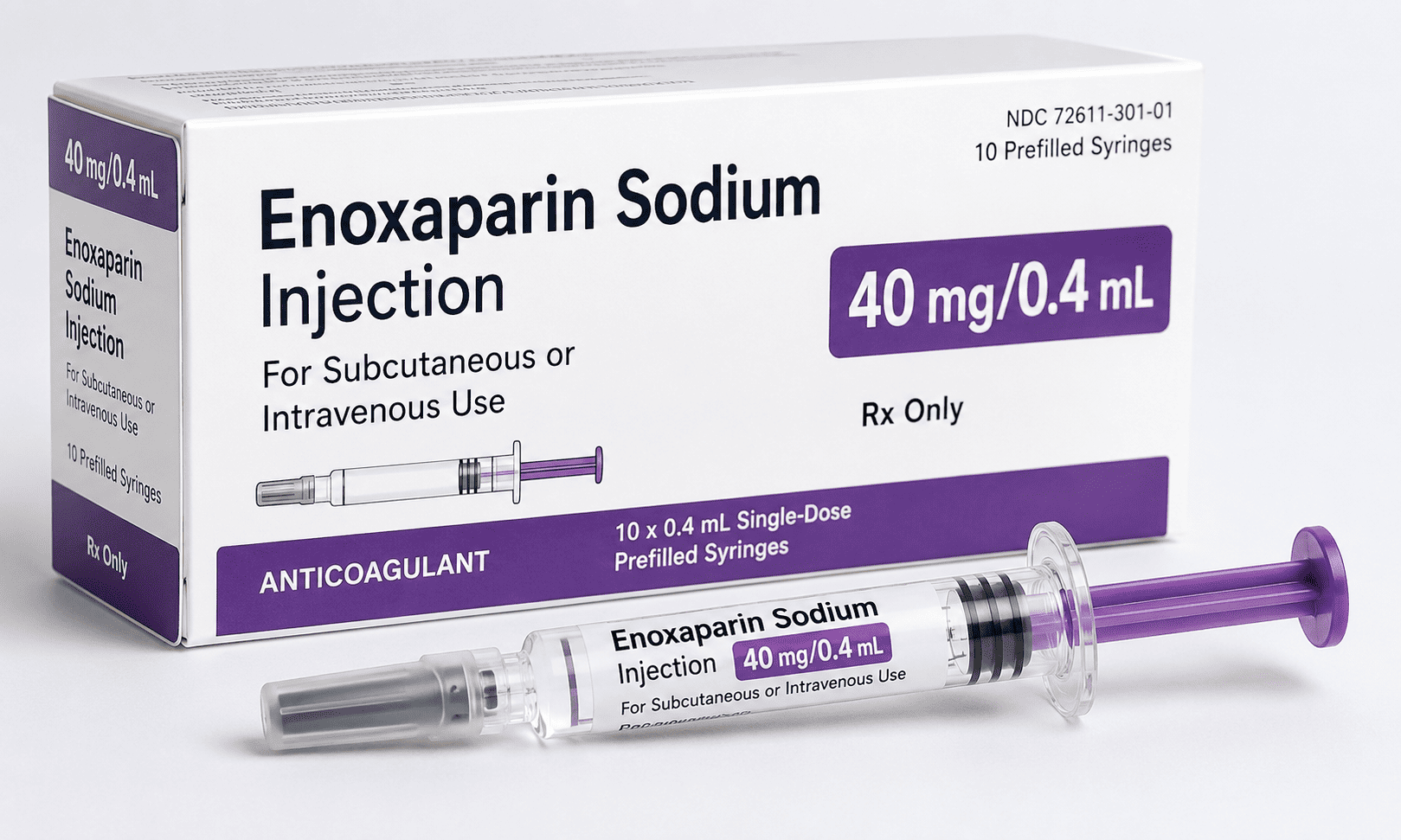
Enoxaparin Sodium Injection is an anticoagulant (blood thinner) medicine used to prevent and treat blood clots. It belongs to a group of medicines known as Low Molecular Weight Heparins (LMWH). It helps prevent the formation of harmful blood clots in veins and arteries, reducing the risk of serious conditions such as deep vein thrombosis, pulmonary embolism, heart attack, and stroke. Pharma Lead is a leading online B2B pharma portal connecting pharma entrepreneurs with ISO, WHO-GMP & GMP-certified Enoxaparin Sodium Injection for PCD franchise and third-party manufacturing opportunities.
Enoxaparin Sodium Injection Uses, Benefits, Dosage, Side Effects & Precautions
1. Prevention of Deep Vein Thrombosis (DVT)
Deep Vein Thrombosis is a condition in which blood clots form in deep veins, usually in the legs. Enoxaparin helps prevent clot formation, especially after surgery or prolonged bed rest.
2. Treatment of Deep Vein Thrombosis (DVT)
The injection is used to treat existing blood clots and prevent them from becoming larger or causing complications.
3. Pulmonary Embolism (PE)
Pulmonary Embolism occurs when a blood clot travels to the lungs. Enoxaparin is used to treat and prevent this potentially life-threatening condition.
4. Prevention of Blood Clots After Surgery
Doctors commonly prescribe Enoxaparin after:
- Orthopedic surgery
- Knee replacement surgery
- Hip replacement surgery
- Abdominal surgery
to reduce the risk of clot formation.
5. Acute Coronary Syndrome (ACS)
Enoxaparin is used in patients with:
- Unstable Angina
- Non-ST Elevation Myocardial Infarction (NSTEMI)
- ST-Elevation Myocardial Infarction (STEMI)
It helps reduce the risk of heart attacks and other cardiovascular complications.
6. Blood Clot Prevention in Bedridden Patients
Patients confined to bed due to severe illness may develop blood clots because of reduced mobility. Enoxaparin helps lower this risk.
7. Dialysis Patients
The injection is sometimes used during hemodialysis to prevent clotting in the dialysis circuit.
How Does Enoxaparin Sodium Work?
Enoxaparin works by enhancing the activity of antithrombin III, a natural substance in the body that prevents blood clotting.
It primarily inhibits:
- Factor Xa
- Thrombin formation
This action prevents the formation of new blood clots and stops existing clots from growing larger.
Benefits of Enoxaparin Sodium Injection
Effective Blood Clot Prevention
Reduces the risk of dangerous blood clots in high-risk patients.
Lower Risk of Pulmonary Embolism
Helps prevent clots from reaching the lungs.
Improved Heart Protection
Reduces complications associated with heart attacks and unstable angina.
Convenient Dosing
Can be administered once or twice daily depending on the medical condition.
Predictable Anticoagulant Effect
Requires less monitoring compared to traditional heparin.
Dosage of Enoxaparin Sodium Injection
The dosage varies depending on the condition being treated.
For DVT Prevention
- Usually 40 mg once daily
For DVT Treatment
- 1 mg/kg every 12 hours
- Or 1.5 mg/kg once daily
For Acute Coronary Syndrome
- 1 mg/kg every 12 hours
Important: Dosage should always be determined by a qualified healthcare professional.
How to Administer Enoxaparin Injection
- Wash hands thoroughly.
- Clean the injection site.
- Inject under the skin of the abdomen.
- Do not rub the injection site after administration.
- Rotate injection sites to reduce irritation.
Side Effects of Enoxaparin Sodium Injection
Like all medicines, Enoxaparin may cause side effects.
Common Side Effects
- Pain at injection site
- Redness or bruising
- Swelling
- Mild bleeding
- Nausea
Serious Side Effects
- Severe bleeding
- Blood in urine
- Black or tarry stools
- Unusual bruising
- Severe headache
- Allergic reactions
- Low platelet count (Thrombocytopenia)
Seek immediate medical attention if serious side effects occur.
Precautions and Warnings
Use with Caution If You Have:
- Kidney disease
- Liver disease
- Bleeding disorders
- High blood pressure
- Recent surgery
- Stomach ulcers
Pregnancy and Breastfeeding
Enoxaparin may be prescribed during pregnancy when necessary. Always consult a doctor before use.
Elderly Patients
Older adults may have a higher risk of bleeding and may require dosage adjustments.
Drug Interactions
Enoxaparin may interact with:
- Aspirin
- Clopidogrel
- Warfarin
- Ibuprofen
- Diclofenac
- Other anticoagulants
- NSAID painkillers
Inform your doctor about all medicines you are taking.
Storage Instructions
- Store below 25°C.
- Protect from direct sunlight.
- Keep out of reach of children.
- Do not freeze.
Frequently Asked Questions (FAQs)
Is Enoxaparin Sodium Injection a blood thinner?
Yes. It is an anticoagulant that helps prevent and treat blood clots.
Can Enoxaparin dissolve existing blood clots?
It does not directly dissolve clots but prevents them from growing larger and allows the body’s natural processes to break them down.
How long is Enoxaparin used?
Treatment duration depends on the condition and doctor’s recommendation. It may range from a few days to several months.
Can Enoxaparin cause bleeding?
Yes. Bleeding is the most important potential side effect and should be monitored carefully.
Can Enoxaparin be self-administered?
Many patients are trained to self-inject Enoxaparin at home under medical supervision.