
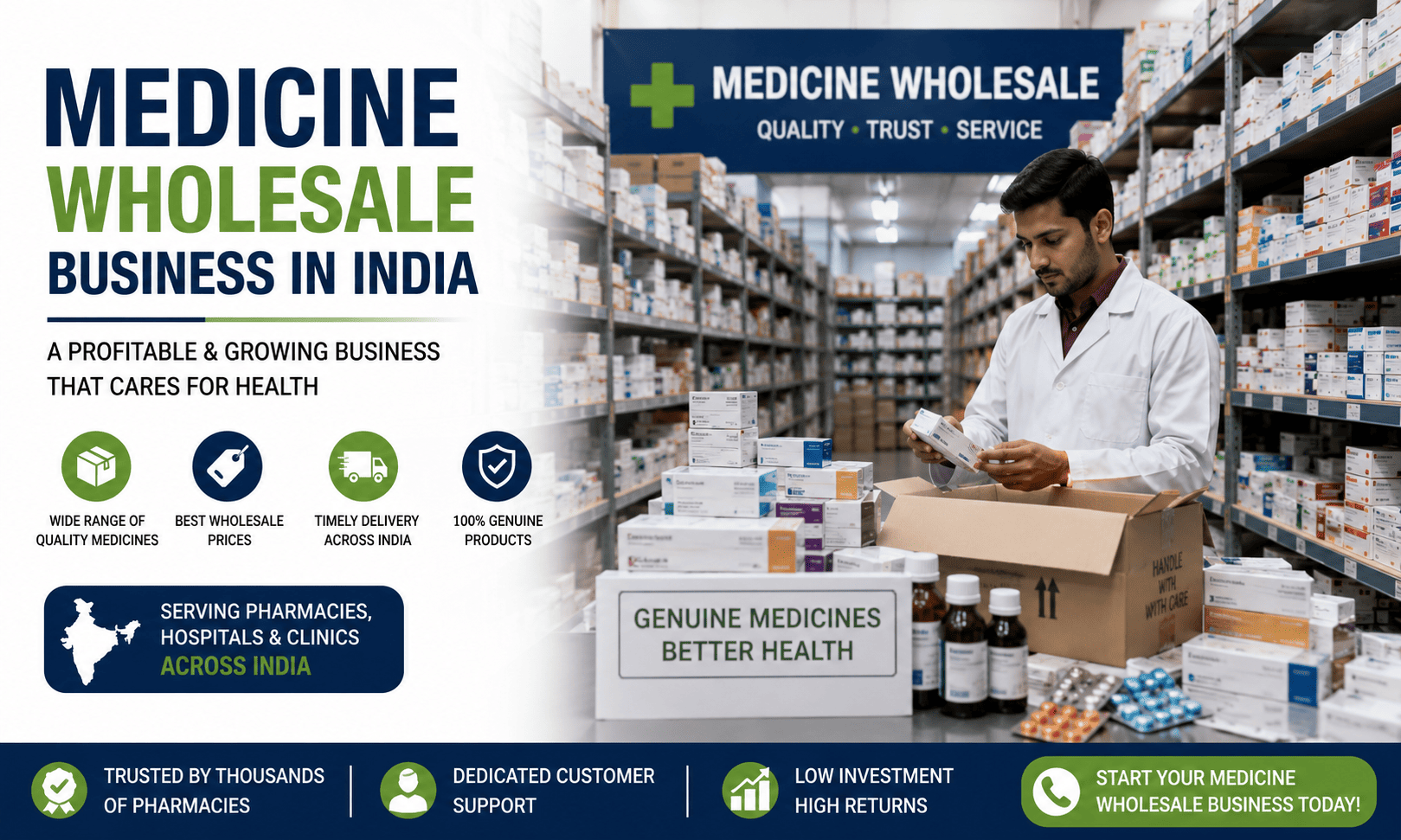
The medicine wholesale business in India is one of the fastest-growing segments of the pharmaceutical industry. With increasing healthcare awareness, rising demand for medicines, expansion of hospitals, clinics, and pharmacies, the pharmaceutical wholesale market offers significant business opportunities for entrepreneurs and distributors. A medicine wholesaler acts as a bridge between pharmaceutical manufacturers and retailers, supplying medicines, healthcare products, surgical items, and medical equipment to pharmacies, hospitals, clinics, and healthcare institutions. Pharma Lead is a leading online B2B pharma portal connecting pharma entrepreneurs with ISO, WHO-GMP & GMP-certified Wholesale Medicine Companies in india for PCD franchise and third-party manufacturing opportunities.
Scope of Medicine Wholesale Business in India
India is known as the “Pharmacy of the World” and has one of the largest pharmaceutical industries globally.
Key Growth Factors
- Growing population
- Increasing healthcare expenditure
- Rising prevalence of chronic diseases
- Expansion of healthcare infrastructure
- Growing demand for generic medicines
- Government healthcare initiatives
- Growth of online pharmacies
The Indian pharmaceutical market continues to grow steadily, creating substantial opportunities for medicine wholesalers and distributors.
Benefits of Starting a Medicine Wholesale Business
1. High Demand
Medicines are essential products required throughout the year, ensuring continuous market demand.
2. Stable Industry
The healthcare sector remains relatively unaffected by economic downturns.
3. Recurring Business
Retail pharmacies and hospitals regularly require medicine replenishment.
4. Multiple Product Categories
Wholesalers can deal in:
- Tablets
- Capsules
- Syrups
- Injections
- Antibiotics
- Nutraceuticals
- Ayurvedic Products
5. Attractive Profit Margins
Profit margins vary according to product categories, brands, and distribution agreements.
What is a Medicine Wholesale Business?
A medicine wholesale business involves purchasing medicines and pharmaceutical products in bulk directly from pharmaceutical companies or authorized distributors and supplying them to retailers, chemists, hospitals, nursing homes, and healthcare providers.
Wholesale distributors handle:
- Prescription medicines
- Generic medicines
- OTC (Over-the-Counter) products
- Surgical products
- Nutraceuticals
- Ayurvedic medicines
- Pediatric medicines
- Injectable products
- Medical devices
Requirements to Start a Medicine Wholesale Business
1. Drug License
A wholesale drug license is mandatory to sell pharmaceutical products legally.
The license is issued by the State Drug Control Department under the provisions of the Drugs and Cosmetics Act.
Documents Required
- Identity proof
- Address proof
- Property ownership/rent agreement
- Pharmacist qualification documents
- Storage facility details
- GST registration
- Business constitution documents
2. GST Registration
GST registration is mandatory for pharmaceutical wholesale businesses.
Benefits include:
- Input tax credit
- Legal compliance
- Easy interstate transactions
3. Storage Facility
Medicines require proper storage conditions.
Infrastructure Requirements
- Clean premises
- Adequate space
- Refrigerators for temperature-sensitive medicines
- Air-conditioned storage (where required)
- Shelving and inventory systems
Recommended area:
- 150–300 sq. ft. for a small wholesale setup
- Larger space for extensive inventory
4. Pharmacist Requirement
Many states require a qualified pharmacist or competent person with relevant pharmaceutical experience.
Investment Required
The investment depends on the scale of operations.
| Business Type | Approximate Investment |
|---|---|
| Small Scale | ₹5-10 Lakhs |
| Medium Scale | ₹10-25 Lakhs |
| Large Scale | ₹25 Lakhs to ₹1 Crore+ |
Investment includes:
- Drug license
- Office setup
- Inventory purchase
- Refrigeration equipment
- Computer software
- Staff salaries
- Transportation
How to Start a Medicine Wholesale Business
Step 1: Market Research
Identify:
- Demand for medicines
- Local competitors
- Hospital requirements
- Retail pharmacy needs
Step 2: Choose Product Categories
Popular categories include:
General Medicines
- Antibiotics
- Painkillers
- Antacids
- Antidiabetics
Specialty Medicines
- Cardiac products
- Oncology medicines
- Neurology medicines
Nutraceuticals
- Multivitamins
- Protein supplements
- Health tonics
Step 3: Obtain Licenses
Complete all legal registrations before commencing operations.
Step 4: Partner with Pharma Companies
Work with:
- Pharmaceutical manufacturers
- Authorized distributors
- PCD Pharma companies
Step 5: Build Distribution Network
Target customers:
- Medical stores
- Retail pharmacies
- Hospitals
- Clinics
- Nursing homes
- Healthcare institutions
Marketing Strategies for Medicine Wholesale Business
1. Direct Sales Team
Develop relationships with:
- Chemists
- Doctors
- Hospitals
2. Digital Marketing
Promote your business through:
- Website
- Google Business Profile
- Social Media Marketing
- Email Marketing
3. Pharma B2B Portals
List your business on pharmaceutical B2B platforms to generate leads.
4. Attend Pharma Exhibitions
Participate in:
- Pharma expos
- Medical trade fairs
- Healthcare conferences
Challenges in Medicine Wholesale Business
Competition
Many established distributors operate in major markets.
Expiry Management
Proper inventory management is essential.
Credit Recovery
Retailers often seek credit periods, requiring efficient payment collection systems.
Regulatory Compliance
Businesses must comply with pharmaceutical regulations and taxation requirements.
Tips for Success
Maintain Adequate Stock
Ensure continuous availability of fast-moving medicines.
Build Strong Relationships
Develop long-term partnerships with:
- Pharma companies
- Retailers
- Hospitals
Use Inventory Software
Track:
- Stock levels
- Expiry dates
- Sales records
Focus on Service
Timely delivery and product availability help retain customers.
Future of Medicine Wholesale Business in India
The future of pharmaceutical distribution in India is highly promising due to:
- Growing healthcare awareness
- Increasing demand for affordable medicines
- Expansion of generic medicine markets
- Rising number of hospitals and clinics
- Government healthcare schemes
- Growth in pharmaceutical manufacturing
Wholesalers who adopt digital inventory systems, maintain regulatory compliance, and build strong distribution networks are likely to achieve sustainable growth in the coming years.