
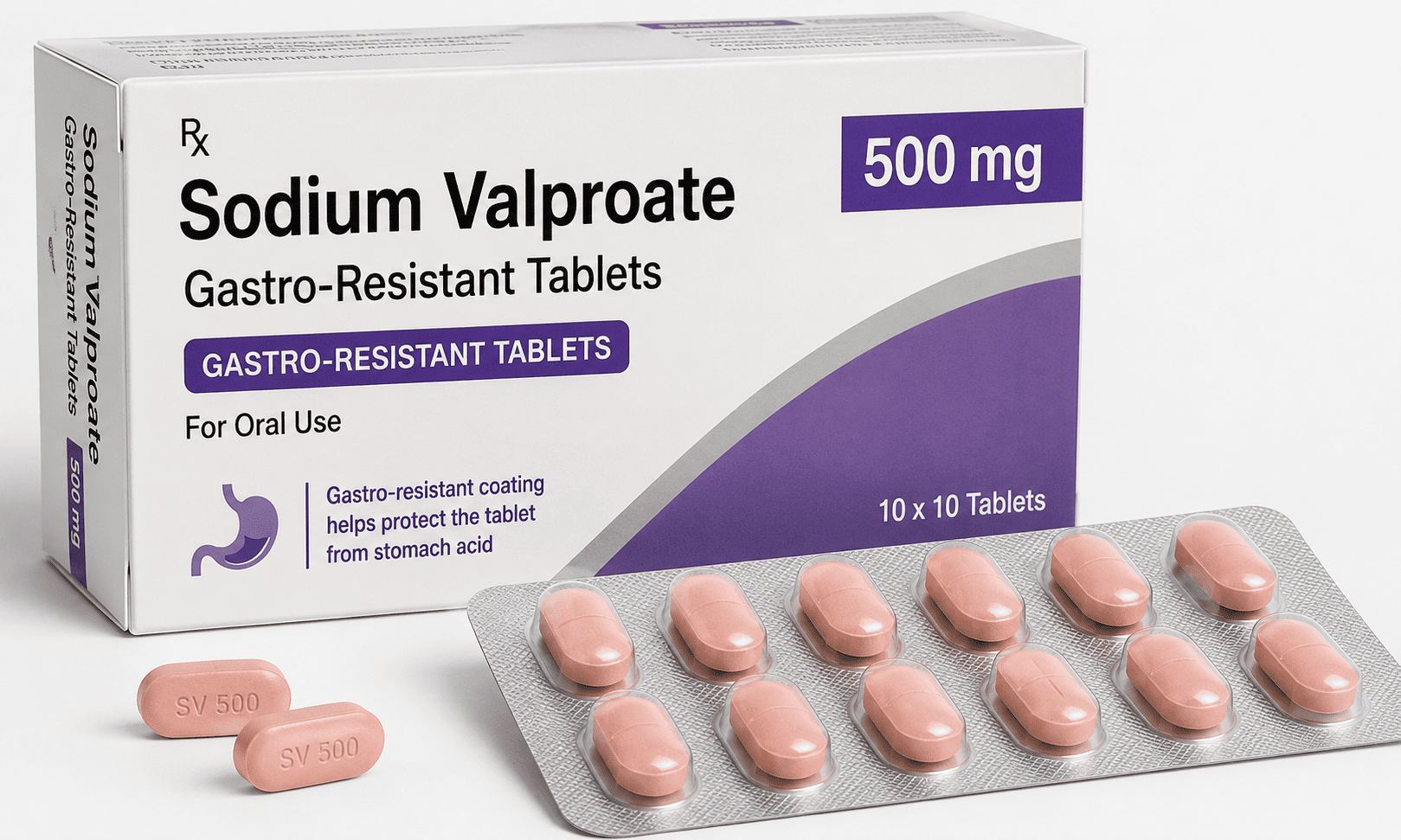
Sodium Valproate Gastro-Resistant Tablets are prescription medicines primarily used to treat various types of epilepsy (seizure disorders). They belong to a class of medications known as antiepileptic drugs (AEDs) or anticonvulsants. The gastro-resistant (enteric-coated) formulation helps the tablet pass through the stomach and dissolve in the intestine, reducing stomach irritation and improving tolerability. Pharma Lead is a Leading Online B2B Pharma Portal designed to connect aspiring Pharma entrepreneurs with ISO, WHO and GMP Cert. Pharma Franchise Company options across India.
Uses of Sodium Valproate Gastro-Resistant Tablets
Composition
Active Ingredient:
- Sodium Valproate
Available Strengths:
- 200 mg
- 300 mg
- 500 mg
- Other strengths depending on the manufacturer
The medicine works by increasing the levels of gamma-aminobutyric acid (GABA) in the brain, a neurotransmitter that helps calm excessive nerve activity and prevents seizures.
1. Epilepsy (Seizure Disorders)
The primary use of sodium valproate is the treatment and prevention of different types of seizures, including:
- Generalized seizures
- Partial (focal) seizures
- Absence seizures
- Myoclonic seizures
- Tonic-clonic seizures
- Mixed seizure disorders
It helps control abnormal electrical activity in the brain and reduces seizure frequency.
2. Bipolar Disorder
In some countries and formulations, sodium valproate is prescribed to:
- Manage manic episodes
- Stabilize mood swings
- Reduce emotional instability
3. Migraine Prevention
Doctors may prescribe sodium valproate to:
- Prevent recurring migraine attacks
- Reduce migraine frequency and severity
It is generally used for prevention rather than acute migraine treatment.
How Sodium Valproate Works
The medicine increases the concentration of GABA, an inhibitory neurotransmitter in the central nervous system.
Benefits of Increased GABA
- Calms nerve signals
- Reduces abnormal brain activity
- Prevents seizures
- Helps stabilize mood
- Supports migraine prevention
Advantages of Gastro-Resistant Tablets
The gastro-resistant coating provides several benefits:
- Protects the stomach lining
- Reduces gastric irritation
- Minimizes nausea and stomach discomfort
- Allows gradual release in the intestine
- Improves patient compliance
Dosage and Administration
General Guidelines
- Take exactly as prescribed by your doctor.
- Swallow tablets whole.
- Do not crush, chew, or break the tablets.
- Take with or after food.
- Take doses at the same time every day.
Typical Adult Dosage
- Initial dose: 600 mg daily
- Gradual dose increase based on response
- Maintenance dose: 1000–2000 mg daily
- Maximum doses vary according to medical condition and body weight.
Pediatric Dosage
Children receive doses based on:
- Age
- Body weight
- Type of seizure
- Medical history
Always follow the pediatrician’s instructions.
Common Side Effects
Most side effects are mild and improve over time.
Gastrointestinal Effects
- Nausea
- Vomiting
- Stomach pain
- Indigestion
- Diarrhea
Nervous System Effects
- Drowsiness
- Dizziness
- Tremors
- Headache
- Fatigue
Other Common Effects
- Weight gain
- Increased appetite
- Hair thinning or temporary hair loss
- Difficulty concentrating
- Mild mood changes
Serious Side Effects
Seek immediate medical attention if any of the following occur:
Liver Problems
Symptoms include:
- Yellowing of skin or eyes
- Dark urine
- Severe fatigue
- Persistent nausea
Pancreatitis
Symptoms include:
- Severe abdominal pain
- Vomiting
- Fever
Blood Disorders
- Easy bruising
- Unusual bleeding
- Frequent infections
Severe Skin Reactions
- Blistering skin
- Severe rash
- Swelling of the face or throat
Mental Health Changes
- Depression
- Suicidal thoughts
- Severe mood changes
Precautions and Warnings
Pregnancy Warning
Sodium valproate carries a significant risk of birth defects and developmental disorders when used during pregnancy. Women of childbearing potential should discuss contraception and treatment alternatives with their specialist.
Liver Disease
Avoid or use with extreme caution in patients with:
- Active liver disease
- Severe hepatic impairment
- Family history of serious liver disorders
Kidney Disease
Dose adjustments may be necessary in patients with kidney impairment.
Elderly Patients
Regular monitoring may be required due to increased sensitivity to side effects.
Drug Interactions
Sodium valproate may interact with:
- Lamotrigine
- Phenytoin
- Carbamazepine
- Phenobarbital
- Warfarin
- Aspirin
- Certain antibiotics
- Antidepressants
- Antipsychotic medicines
Always inform your doctor about all medications and supplements you are taking.
Monitoring During Treatment
Doctors may recommend regular:
- Liver function tests (LFTs)
- Complete blood count (CBC)
- Serum valproate levels
- Kidney function tests
- Weight monitoring
Regular monitoring helps ensure safe and effective treatment.
Storage Instructions
- Store below 25°C.
- Keep away from moisture and direct sunlight.
- Keep out of reach of children.
- Store in the original packaging.
Frequently Asked Questions (FAQs)
Can Sodium Valproate be taken on an empty stomach?
It is generally recommended to take it with or after food to reduce stomach discomfort.
Can I stop taking Sodium Valproate suddenly?
No. Sudden discontinuation can trigger severe seizures. Always consult your doctor before stopping treatment.
Does Sodium Valproate cause weight gain?
Yes, weight gain is a common side effect in some patients.
Is it safe during pregnancy?
It carries significant risks during pregnancy and should only be used under specialist supervision when no suitable alternative exists.